How to pass CMFAS: one study method for every paper
How to pass CMFAS papers with one method: chapter tests, chapter scores, mistake retests and full timed mocks, plus where each of the 9 SCI papers loses marks.
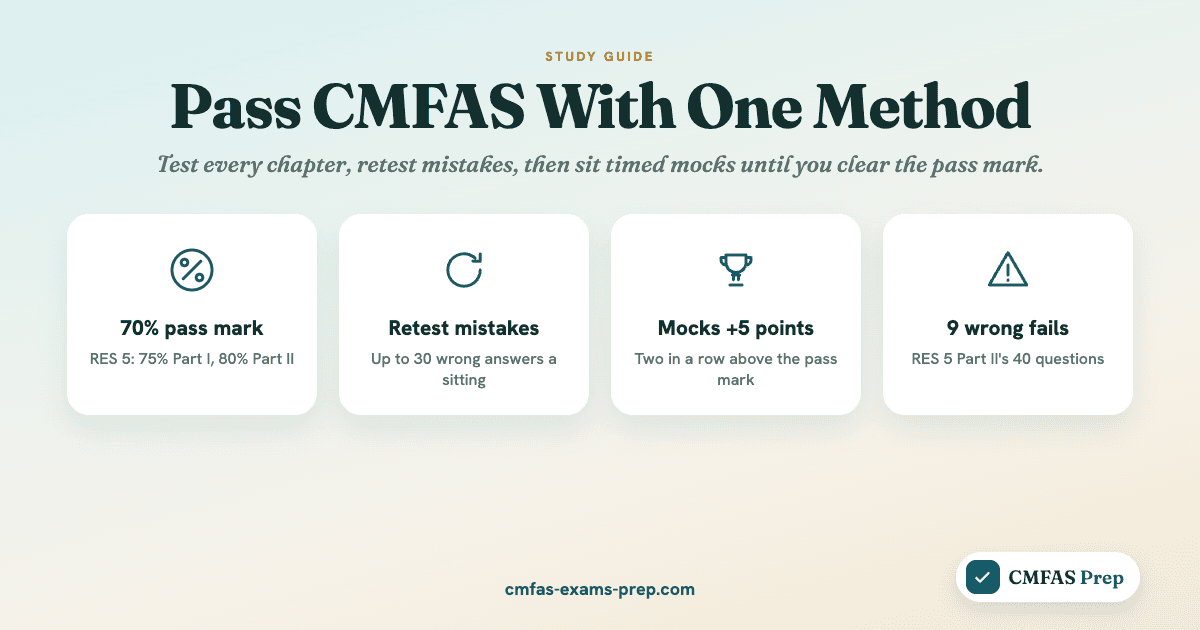
How to pass CMFAS papers comes down to one method that works for all nine SCI papers: read a chapter, answer questions on it the same day, track your score chapter by chapter, retest what you got wrong, and finish with full timed mocks until you clear the pass mark with room to spare. Each paper then has its own trap, and the table below links the study plan that deals with it.
The method, in five steps
1. Read one chapter, then test it the same day
Reading feels like progress, but you only find out what stuck when you have to pick an answer. After each chapter of the study text, close it and do a set of questions on that chapter alone. Questions you get right without hesitating are learnt. Questions you got right by elimination aren't, yet.
Use the eBook SCI sends when you register. It's the text the paper is set on, and SCI records every update in a version control record at the back.
2. Keep a score for every chapter
One total score hides where the marks are going. Write down your result for each chapter, or let the practice app keep it, and sort the chapters from weakest to strongest every few days. Your study time goes to the bottom three, and the chapters you already score well on only need a quick review.
3. Retest your mistakes, not the whole bank
Every wrong answer points at a gap, so go back to the line in the study text that settles it and answer the same question again a day or two later. Our practice app has a "retest your mistakes" mode that brings back only the questions you got wrong, up to 30 a sitting, which saves you hunting for them.
4. Sit full timed mocks
Chapter practice tells you what you know. A full mock tells you whether you can show it at exam pace. Sit mocks in the paper's real question count and time limit, in one go, without the book. Afterwards, the chapters where you dropped marks go back into step 2.
5. Book when the mocks say so
Finishing the reading is a poor signal to book on. Wait until your full mocks clear the pass mark every time. Our rule of thumb, which is our own suggestion and appears nowhere in SCI's rules, is two full mocks in a row at least five points above the pass mark, because exam-day nerves and unfamiliar wording cost most people a few marks.
The pass marks you're aiming at
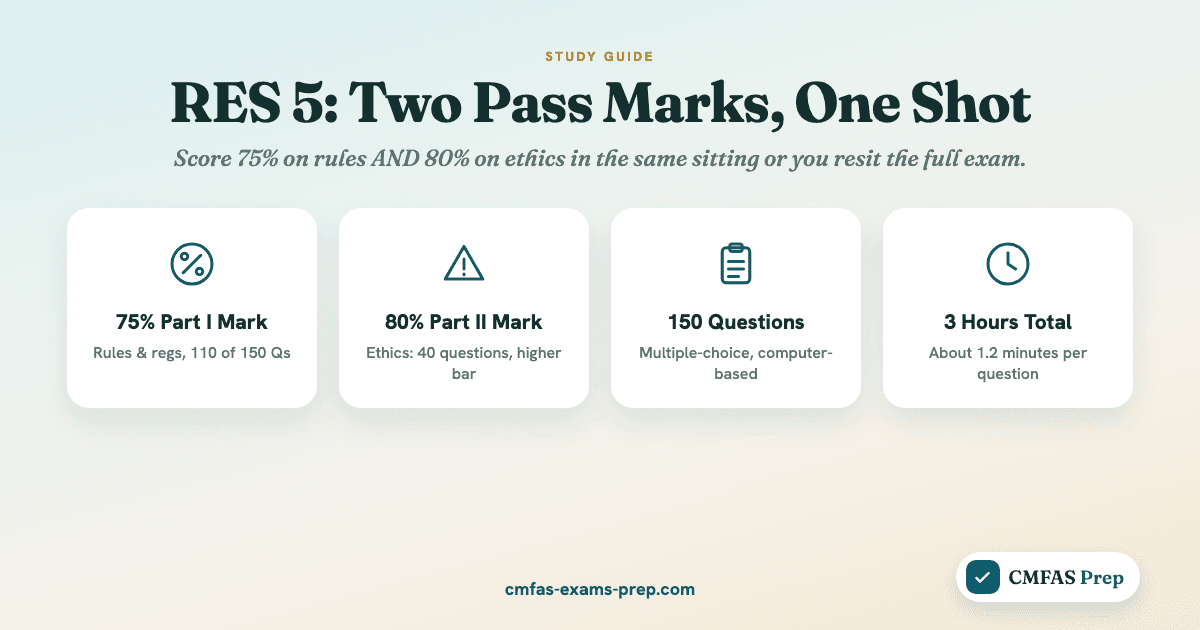
Eight of the nine papers need 70%. RES 5 is the exception: 75% on Part I and 80% on Part II, both in the same sitting. A wrong answer loses nothing beyond that mark, and neither does a blank, so answer every question. The result prints on a slip in the exam room the moment you finish, so there's no waiting to find out.
Where each paper loses marks
The method stays the same across papers. What changes is where the marks go. Each study plan below spends its weeks on that paper's weak spot.
| Paper | Where marks are lost | Study plan |
|---|---|---|
| RES 5 | Part II's 40 questions: 9 wrong and the whole paper fails | RES 5 plan |
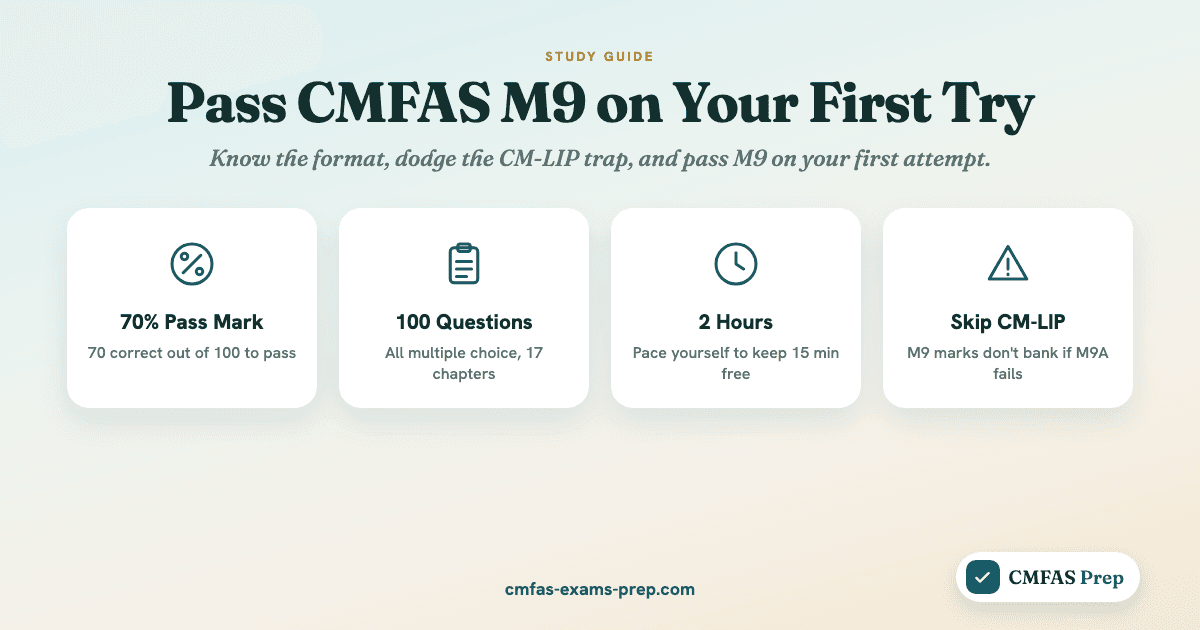
| M9 | 17 chapters in one paper, with ILP unit sums and the legal chapters at the back | M9 plan |
| M9A | Option and payoff questions that take longer than definitions | M9A plan |
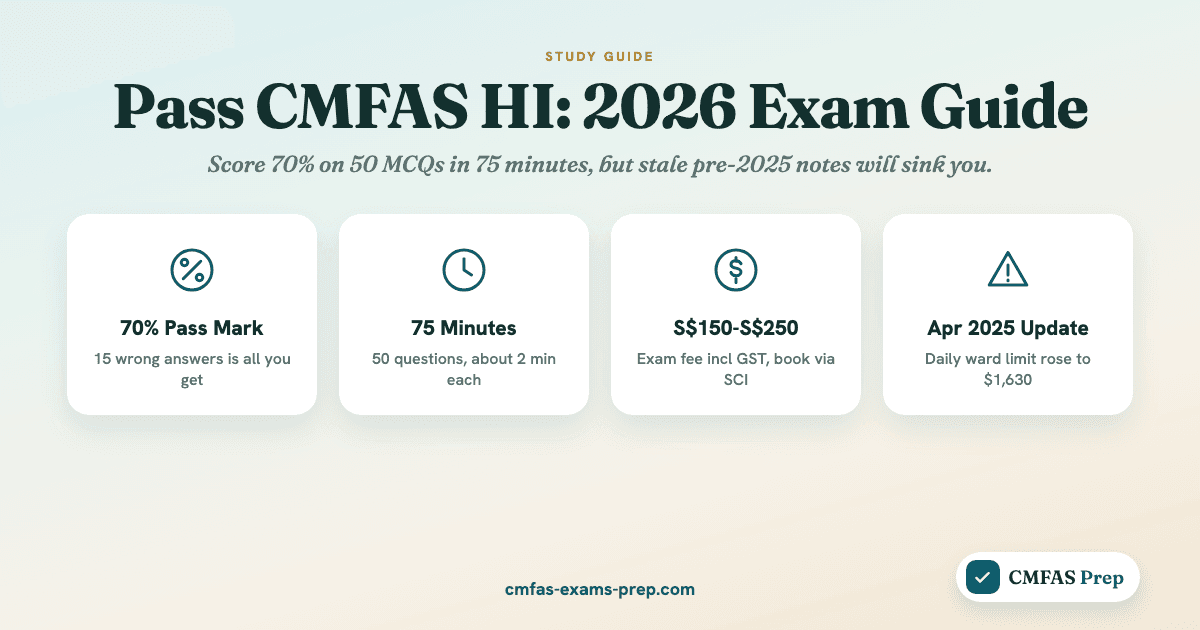
| HI | Four health products that are easy to mix up, plus scheme figures | HI plan |
| M8 | Time value of money sums at about 72 seconds a question | M8 plan |
| M8A | Derivatives and structured products, with the same opening chapters as M9A | M8A plan |
| BCP | The principles chapter, where similar-sounding terms become answer options | BCP plan |
| PGI | Exclusions and conditions: is this particular loss covered? | PGI plan |
| ComGI | Nine areas of commercial cover, each with its own terms | ComGI plan |
Habits that cost people a pass
Each of these habits feels harmless while you study, and each one costs marks on the day.
- Reading the study text twice instead of testing yourself once. The second read feels productive and mostly isn't.
- Practising from old question sets. SCI updates its study texts, so answers written for an older edition can now be wrong. Our note on where the study text is out of date shows the kind of changes involved.
- Skipping timed practice. Knowing the material at your own pace and knowing it at 72 seconds a question are different skills.
- Booking a date first and hoping the studying catches up. A retake costs the full fee again.
- Misreading the question. RES 5 in particular is full of NOT stems and look-alike rules, which our guide to RES 5 exam traps walks through.
A week that works around a day job
Most recruits study around full-time work. A pattern that fits:
- Weeknights: one chapter, read and tested, in about an hour.
- Saturday: a mixed set across the week's chapters, then the retest of everything you got wrong.
- Sunday: rest, or a full mock once you've covered the whole text.
How long the whole thing takes depends on the paper and on you. SCI recommends at least 40 to 50 hours of study for each general insurance module. For the CMFAS papers it publishes no figure, so treat any number you read as an estimate.
Free practice to start with
You don't need to pay anything to try the method on one chapter. Our free sample questions for each paper have worked answers, and every paper page shows a question from our bank. When you're ready for chapter scores, mistake retests and full timed mocks, start with RES 5 as a single paper, the one most recruits sit first.
Sources
- SCI, RES5 exam details (format, pass marks, marking, study materials), read 12 October 2026
- SCI, Certification in General Insurance exam details (recommended study hours), read 12 October 2026
- SCI, examination rules and regulations (results on completion), read 12 October 2026
Practise RES 5 now
700+ exam-style RES 5 questions with instant explanations.
Frequently asked questions
Test yourself on each chapter the same day you read it, keep a score per chapter, retest every question you got wrong and finish with full timed mocks in the paper's real format.
When your full timed mocks clear the pass mark every time. Our own rule of thumb is two mocks in a row at least five points above the pass mark.
70% for eight of the nine SCI papers. RES 5 needs 75% on Part I and 80% on Part II in the same sitting.
Be careful. SCI updates its study texts, so answers written for an older edition can now be wrong. Practise against the edition you'll be examined on.