A study plan for ComGI: taming the nine commercial classes
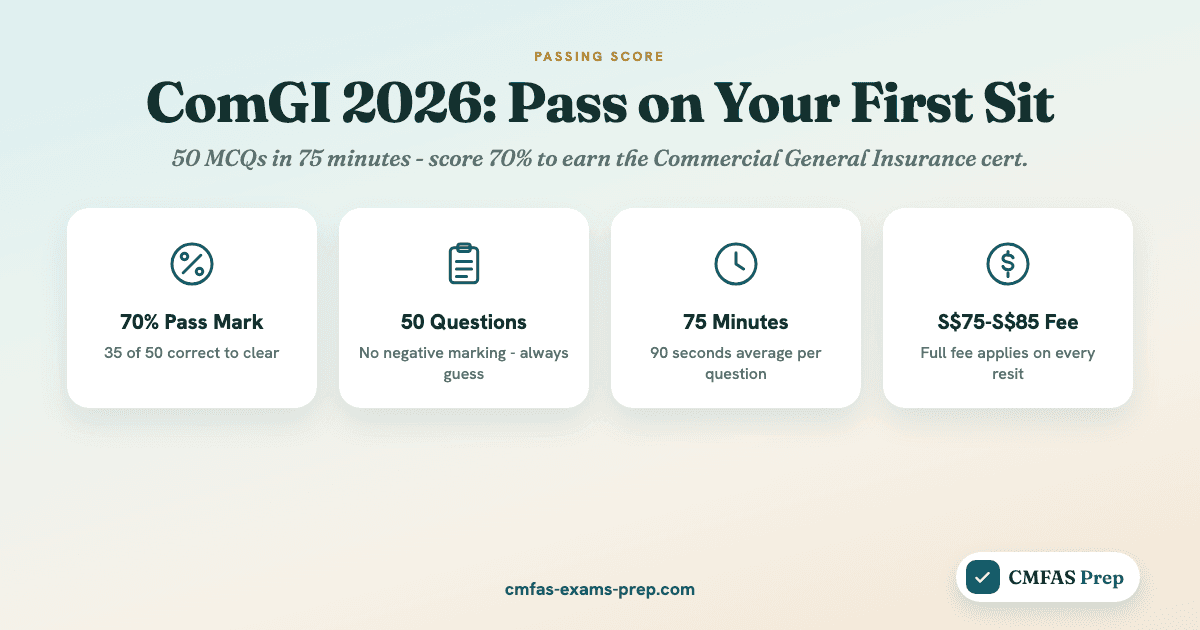
ComGI means 35 of 50 in 75 minutes. This guide covers all nine chapters, why BCP comes first, and a three-week plan that fits a working week.
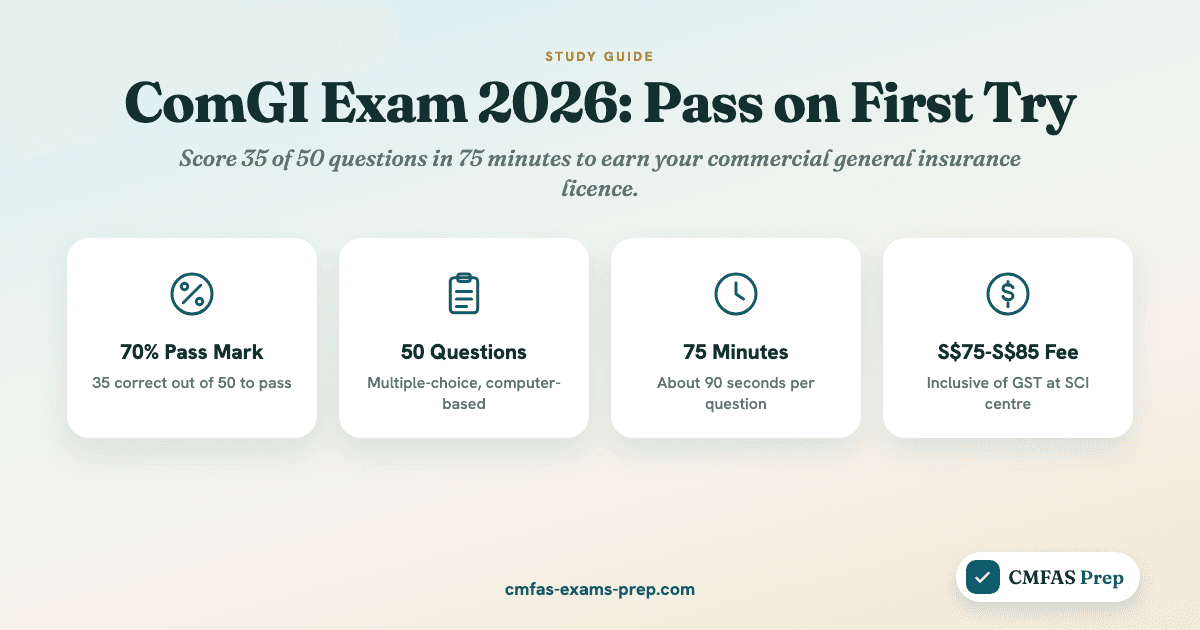
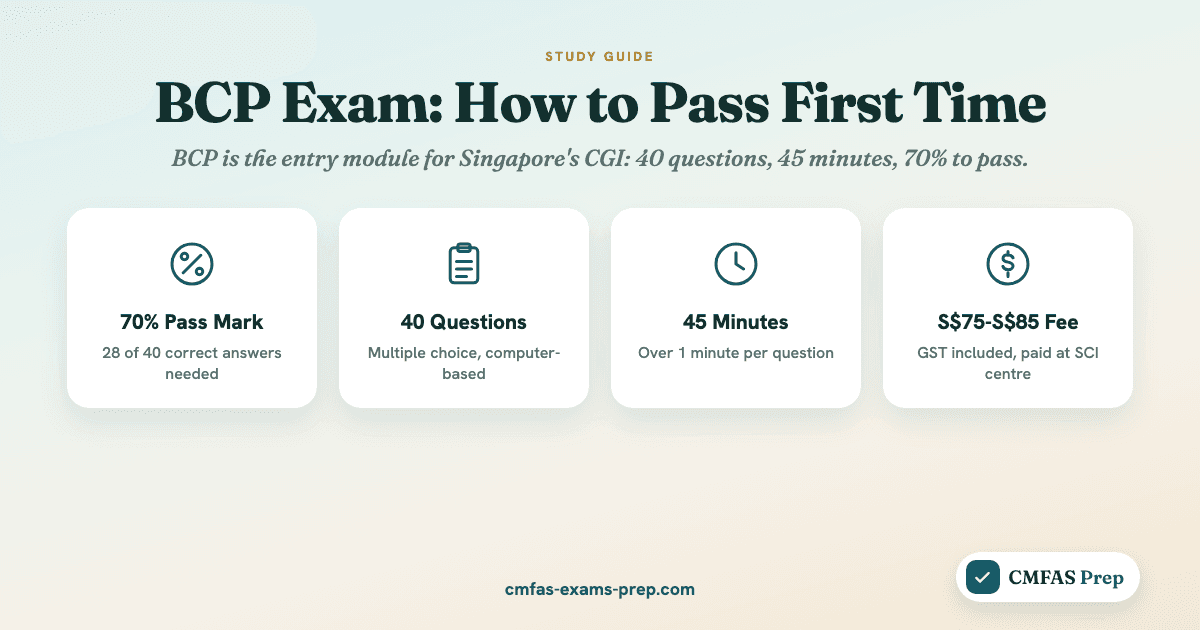
To pass the ComGI exam you need 35 correct answers out of 50 multiple-choice questions inside 75 minutes, which works out to 70 percent. Most candidates who clear it on the first try do two things: they finish BCP before they start, and they practise full sets of questions rather than only reading the study text.
ComGI stands for Commercial General Insurance. It is one of the three modules that make up the Singapore College of Insurance's Certification in General Insurance (CGI), the qualification you need before you can advise on or sell commercial general insurance in Singapore. Where a personal-lines module deals with a household's car or home, ComGI deals with the risks a business carries: its factory, its legal exposure, its cargo in transit, its construction projects, and the people it employs. If your role touches any of that, this module is not optional.
This guide covers the exam format, why the module order matters, what each of the nine chapters actually asks of you, and a three-week plan that fits around a working week.
The numbers you are sitting for
Here is the format at a glance so you know exactly what exam day looks like.
| Item | Detail |
|---|---|
| Questions | 50 multiple-choice |
| Time | 75 minutes |
| Pass mark | 70% (35 of 50) |
| Fee | S$75-S$85 incl. GST |
| Administered by | Singapore College of Insurance (SCI) |
| Study text | 7th Edition |
| Format | Computer-based at an SCI centre |
A calculator is allowed, but only models on the SCI approved list. Check that before you book, not on the morning of the exam. If you want the pass mark and timing pulled apart in more detail, read the ComGI passing score and exam format guide.
Take BCP first, not ComGI
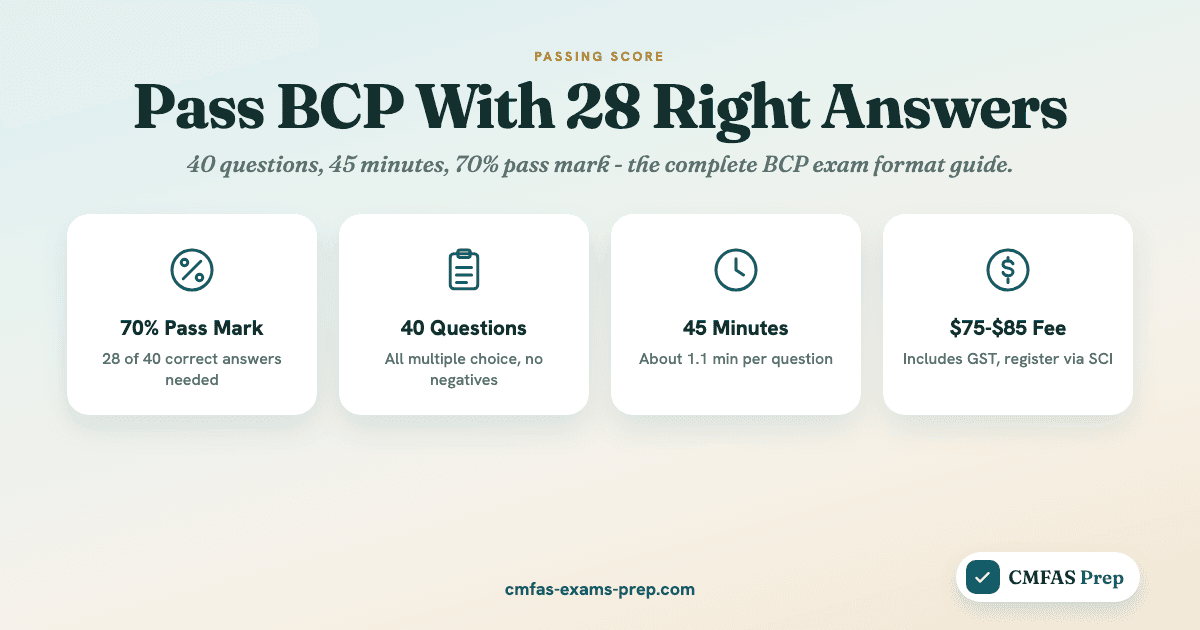
BCP (Basic Insurance Concepts and Principles) is the groundwork for both ComGI and PGI, and SCI sequences it first for a reason. It teaches the insurance and reinsurance market, the regulatory framework you operate inside, the principles of insurance, the law of contract, and how claims and ethics work in practice.
ComGI assumes you already hold those ideas. Questions on indemnity, insurable interest, or how a claim is settled do not stop to explain the principle first, so a candidate who skipped BCP ends up relearning fundamentals while also trying to absorb nine commercial product lines. Sit BCP, pass it, then come to ComGI with the basics already in place.
What the nine chapters actually test
The 7th Edition is built around nine chapters, each a different class of commercial cover. Questions are spread fairly evenly, but in practice Property (Chapter 1), Liability (Chapter 3), and Commercial Motor (Chapter 4) tend to carry a few more than the rest. Study every chapter, and give those three a little extra room.
Property insurance
This is fire and industrial all-risks territory, plus property damage cover. Know the structure and conditions of the standard fire policy, how insurable interest and indemnity apply to it, and the mechanics of the average clause and co-insurance, which is where under-insurance bites the policyholder. The standard period of insurance is 12 months, and a fair share of questions turn on the basis of settlement and the common exclusions.
Business interruption insurance
BI sits on top of property cover and responds to lost profit after insured damage. The terms examiners reach for are gross profit, the indemnity period, and increased cost of working. The detail candidates most often miss: under current practice, payroll is usually insured at 100 percent. Expect at least one calculation here, so have the calculator habit ready.
Liability and contingency insurance
Public liability, products liability, and professional indemnity all live in this chapter, and the exam wants you to tell them apart. Public liability answers for injury or damage to third parties; products liability answers for harm caused by a product after it leaves the insured's hands. Layer on top the difference between an occurrence trigger and a claims-made trigger, plus how limits of indemnity are set, and you have covered most of what this chapter throws at you.
Commercial motor insurance
Same skeleton as personal motor, scaled up to vans, trucks, and fleets. Know which commercial vehicles fall under which class, how third-party cover differs from comprehensive, how a fleet policy is rated as one unit, and how no-claim discount carries across that fleet.
Marine and aviation insurance
Cargo, hull, and aviation risk. The Institute Cargo Clauses are the centre of gravity here: Clause A is the widest, all-risks cover, while B and C are named-perils and progressively narrower. Add the basics of marine hull cover and aviation liability and you have the shape of the chapter.
Construction, machinery and bond insurance
Contractors' All Risks (CAR) covers a building project; Erection All Risks (EAR) covers plant and machinery being installed; machinery breakdown picks up after the project is running. The bonds section trips people up, so hold onto one idea: a counter-guarantor is the party who agrees to reimburse the insurer if a bond is called.
Pecuniary insurance
Money-related cover, mostly fidelity guarantee and credit insurance. Fidelity guarantee responds when a dishonest employee causes a loss. The fine-point worth memorising: any money already retained from a defaulting employee is deducted from the claim, so the insurer pays the net figure rather than the gross.
Foreign worker insurance
Medical expenses and personal accident cover for foreign workers, tied to Singapore's employment requirements. A smaller chapter, but the regulatory hooks make for clean, factual questions, which means easy marks if you have read it.
Group personal accident and corporate travel insurance
Group PA and corporate travel policies for a company's staff. Another lighter chapter that rewards a careful read close to exam day.
You can drill any of these one at a time on CMFAS Prep, which marks each answer with the reasoning behind it and shows your accuracy per chapter, so weak spots surface before exam day instead of on it.
A three-week plan that fits a full-time job
Three weeks is enough if the time is structured. Front-load the heavier chapters while you are fresh.
Week one, take the foundation block: Property, Business Interruption, and Liability. Property and BI are linked in real life, since the same fire that triggers a property claim can also stop the business, so studying them together makes the BI calculations click.
Week two, work through the commercial lines: Commercial Motor, Marine and Aviation, and Construction and Bonds. These are more technical and term-heavy, so lean on practice questions rather than re-reading notes.
Week three, finish the specialty chapters (Pecuniary, Foreign Worker, Group PA and Corporate Travel) and switch to full mock exams. Sit two or three under real timing. The point is less the score and more spotting which chapters still leak marks while you can still fix it.
Exam-day habits that protect marks
Seventy-five minutes across 50 questions gives you about 90 seconds each, which is comfortable as long as you do not stall. Flag anything that stops you for more than two minutes, move on, and return with your remaining time.
Read every question to the last word. ComGI leans on qualifiers like usually, typically, must, and shall, and a single one of those can flip the correct answer. The calculator only matters in BI and property valuation questions, so practise those by hand beforehand and the few calculations on the day will feel routine.
What ComGI lets you do
Pass ComGI alongside BCP and you are certified to advise on and sell the full commercial general range: property and business interruption, liability, commercial motor, marine and aviation, construction and engineering, pecuniary cover, insurance bonds, foreign worker cover, and group personal accident.
Start practising
Reading the 7th Edition gets you the facts; answering questions under time is what gets you the pass. Warm up with a free ComGI mock set, then move to chapter-by-chapter drills and timed papers on CMFAS Prep. Once your mock scores sit above 70 percent two sittings in a row, book your slot on the SCI site and go.
Practise ComGI now
800+ exam-style ComGI questions with instant explanations.
Frequently asked questions
ComGI stands for Commercial General Insurance. It is one of three modules under the SCI Certification in General Insurance (CGI) framework, alongside BCP (Basic Insurance Concepts and Principles) and PGI (Personal General Insurance).
Yes, SCI recommends taking BCP first as it forms the foundation knowledge for both ComGI and PGI. BCP covers insurance principles, law of contract, and regulatory frameworks that ComGI builds upon.
The ComGI exam has 50 multiple-choice questions to be completed in 75 minutes (1 hour 15 minutes). The passing score is 70%, meaning you need at least 35 correct answers.
While questions are fairly evenly distributed across all 9 chapters, Chapters 1 (Property Insurance), 3 (Liability Insurance), and 4 (Commercial Motor Insurance) tend to have slightly more questions.
Yes, calculators are allowed for the ComGI exam. Check the SCI website for the list of approved calculator models before your exam.
After passing ComGI (along with BCP), you will be certified to provide advice and sell commercial general insurance products including property, liability, motor, marine, aviation, construction, and pecuniary insurance.